Back to Home

The Tricolours of the Flag
Green expresses life and nature.
This colour represents the lush landscapes of Iran, including the Caspian regions in the north, the oak forests of Zagros, the Persian Gulf coastline, and the Arasbaran forests.
White expresses freedom and peace.
This colour reflects the Dasht-e Kavir (Great Salt Desert), the Mars-like Martian Mountains of Chabahar, and the snowy peaks of Damavand, Alam-Kuh, Sahand, Sabalan, and the great Zagros and Alborz mountain ranges.
Red expresses courage and bravery.
This colour represents the red beaches of Hormuz, Maharloo and Lipar lakes, the colourful Aladaglar mountains, and the red mountains of the Semnan desert.
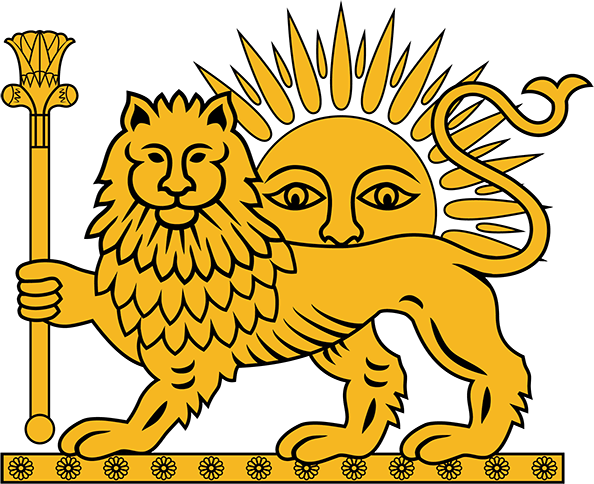
The emblem of the flag will be The Lion and Sun (Persian: شیر و خورشید, Shir o Khorshid);
The Lion represents strength and vitality. It symbolizes Iran as a whole and a united nation under one flag.
The Sun represents life, energy, hope, and the dawning of a new day in the colourful ancestral land. In this design, the Sun is rendered with gentle human features inspired by historical Persian artistic traditions, where the Sun often appeared with a serene face symbolizing warmth, life, and renewal. The surrounding 21 rays further reinforce these themes, emphasizing continuity, renewal, and cultural renaissance.
The Lion Without the Sword
In historical versions of the emblem, a sword was added to the lion during the Qajar period (late 18th to early 19th century). The sword symbolized royal authority and, in Shiʿa interpretation, was associated with Zulfiqar, the sword of Imam Ali, representing justice and strength.
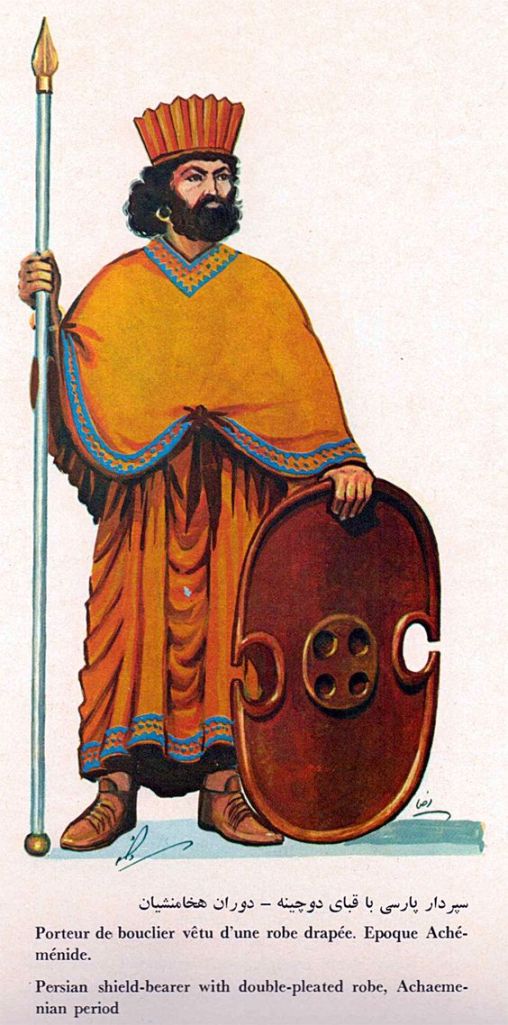
In this new design, however, the Lion is shown in a defensive and protective posture. Instead of a sword, the Lion holds an Achaemenid-style spear topped with a blossoming pomegranate flower (Golnar), transforming a symbol of warfare into one of life, renewal, dignity, and unity.
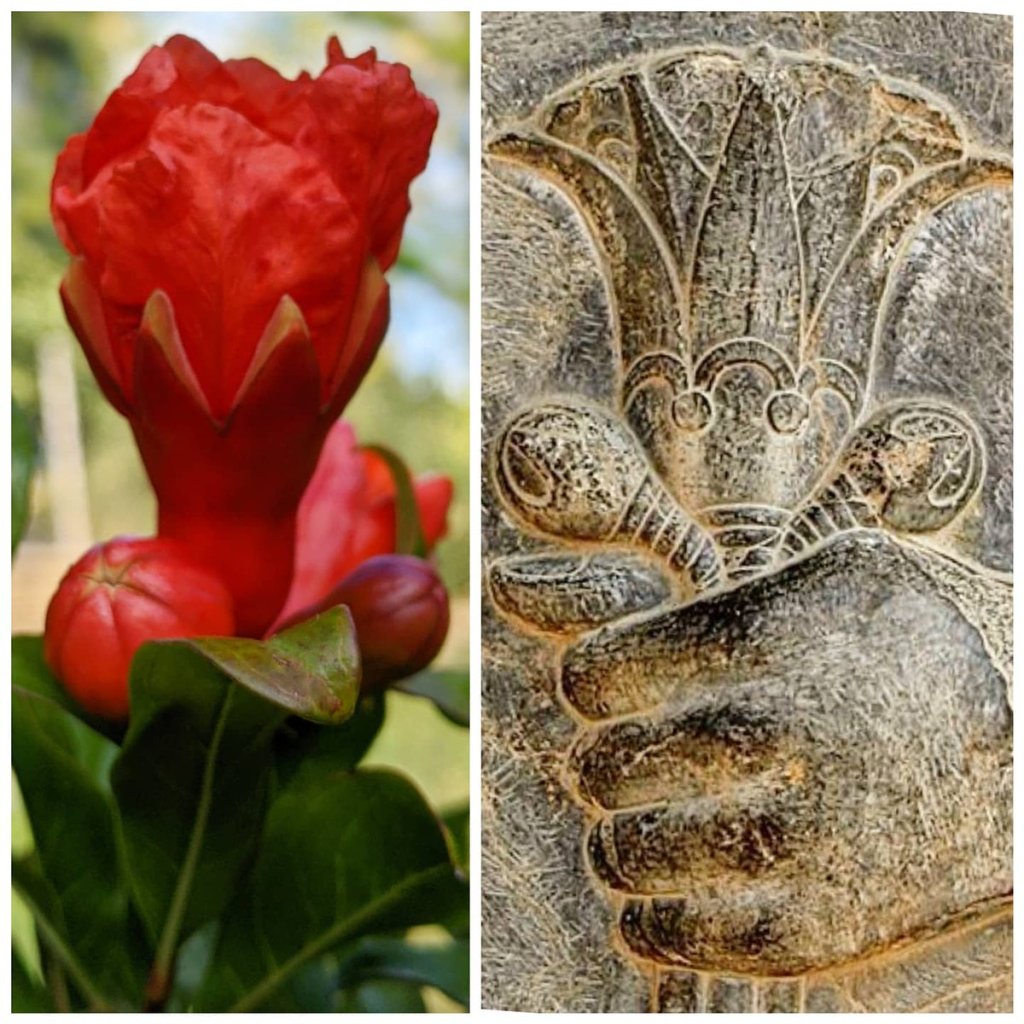
The pomegranate flower symbolizes life, love, renewal, and shared humanity. It represents an alliance of all cultural, ethnic, and religious backgrounds across Iran.
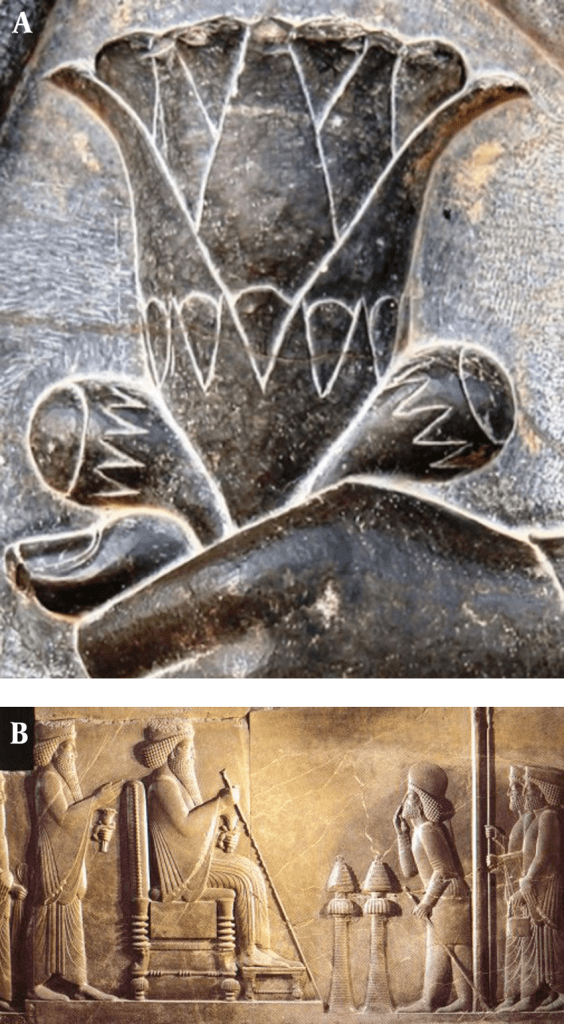
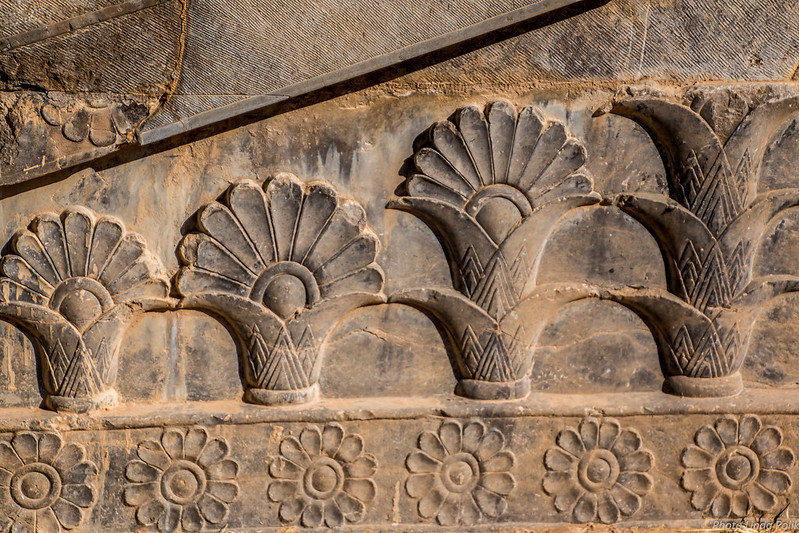
Floral motifs appear in relief carvings at Persepolis (circa 500 BC), where they symbolize continuity, vitality and royal dignity. These ancient forms inspire the peaceful reinterpretation in the flag’s design.
Symbolism in the Lion’s Design
The lion’s mane contains three levels with 11, 9, and 7 sections, symbolizing intuition, wisdom, and completeness.
The number 7 also refers to Haftsin (هفتسین), the seven symbolic items displayed during Nowruz celebrations.
The lion’s tail ends in a blossoming lotus, symbolizing resilience, rebirth, and triumph over hardship.
The Floral Base
The base of the emblem contains 12 lotus flowers, representing the twelve months of the year and the cycle of time. Lotus and rosette motifs appear in Achaemenid art at Persepolis, where they symbolize renewal, continuity, and the enduring nature of life. In this design, the twelve petals also reflect the rhythm of the Iranian calendar and the connection between the sun, time, and the seasons.

Historical Background of the Lion and Sun
The Lion and Sun motif in its combined emblem form dates back to the medieval period (around the 12th century) and was influenced by astrological symbolism, particularly the Sun in the zodiac sign of Leo.
Over centuries, Iranian dynasties adopted and reinterpreted the emblem, giving it cultural, royal, and later national meaning.
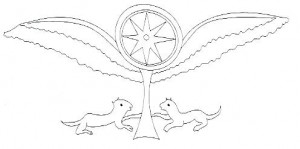
While lions and solar symbols appear separately in ancient Iranian and Near Eastern art, symbolizing power, divinity, and cosmic order, the combined Lion and Sun emblem developed later. Its recognizable form emerged in the medieval Islamic period before becoming a lasting symbol of Iranian identity.
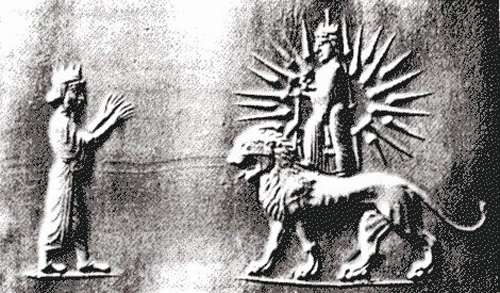
This flag concept was designed in September and October 2022 as a proposal for a future democratic and secular Iran, aiming to preserve Iran’s history, cultural depth, and unity while expressing peace, life, and renewal. The design draws inspiration from historical interpretations of the Lion and Sun motif, particularly those seen during the Safavid era, while reimagining the symbol in a modern, peaceful, and unifying form.
All rights reserved.
To deny people their human rights is to challenge their very humanity.”
— Nelson Mandela
Any questions about the new flag idea?


 New Iran Flag پرچم جدید ایران

